
Practical Protection: Complexity of Survival
Understanding Prey and Defense: An Oversimplification
Nature offers a fascinating lens through which we can observe the behaviors of prey and defense mechanisms. These behaviors are not only crucial for survival in the wild but also provide valuable insights into animal training and behavior, especially in the context of dogs.
Prey Behavior: Evasion and Flight
Prey animals are experts in the art of evasion. Their primary strategy is to avoid detection or, failing that, to escape swiftly from predators. When a prey animal senses danger, it instinctively turns away, showing its side or back to the predator as it moves away rapidly. This behavior signals to the predator that it is prey, triggering a chase response.
In the context of dog behavior, when a dog sees a person or another animal moving away from it, particularly showing their side or back, it may perceive them as prey. This can incite the dog to chase and bite, attempting to stop the "prey" by getting a firm grip and pulling it down. This is often used in training to help dogs develop a deep, strong grip, as seen in certain dog sports or protection training.
Defense Behavior: Confrontation and Control
Contrasting with prey behavior, defense is characterized by direct confrontation. A defensive animal will face its adversary head-on and may move towards the threat to assert control or deter attack. This behavior is not about fleeing but rather about standing ground and protecting oneself or one's territory.
In dog training, when a dog is working in defense mode, it tends to exhibit a shallow, quick grip. This is because a defensive dog aims for a swift attack and retreat, making it easier to escape if needed. The grip is often accompanied by growling and shaking, indicating the dog's defensive state.
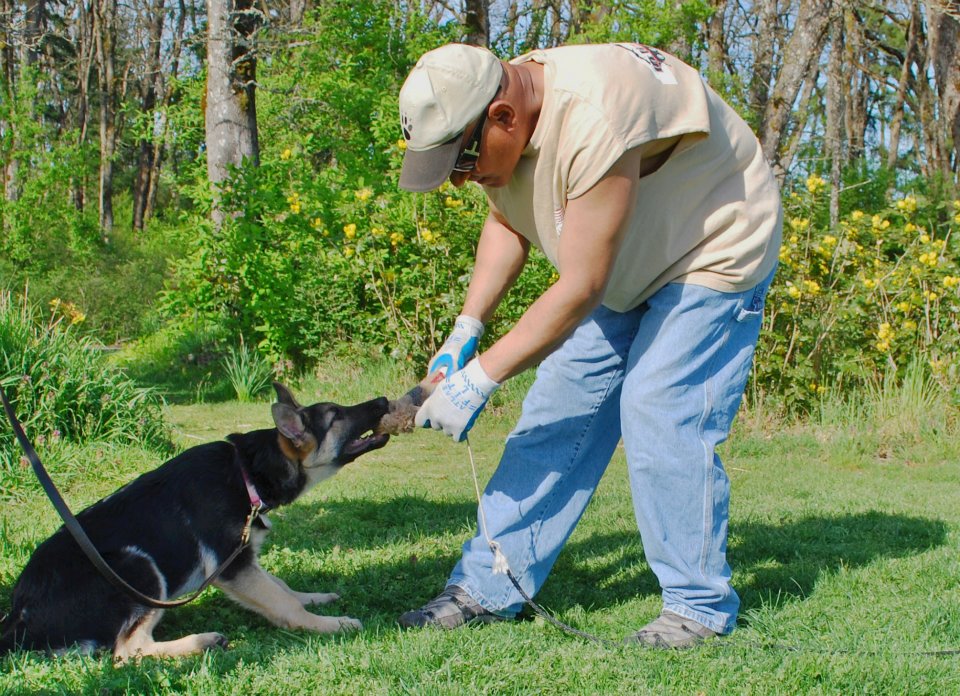
When training dogs, handlers must recognize these signs to understand whether a dog is in a prey or defense mindset. For activities like playing tug-of-war with a dog, it's important to engage the dog in prey behavior, encouraging them to chase and play rather than confront defensively.
Conclusion
Recognizing the differences between prey and defense behaviors in dogs can greatly enhance training outcomes and improve safety. By understanding these natural instincts, handlers can tailor their approaches to either encourage playfulness or manage defensive reactions, ultimately fostering a better relationship with their canine companions.
Stay connected with news and updates!
Join our mailing list to receive the latest news and updates from DTC.
Don't worry, your information will not be shared.
We hate SPAM. We will never sell your information, for any reason.
